RF Shield Manufacturers in India · Since 1973
Precision RF Shields & EMI Shielding Solutions
Kristeel manufactures high-performance RF shielding cans for electronics, semiconductors, defence, and automotive applications — backed by in-house plating, R&D support, and tape-and-reel automation for your production line.
50+Years of precision manufacturing
7Industries served globally
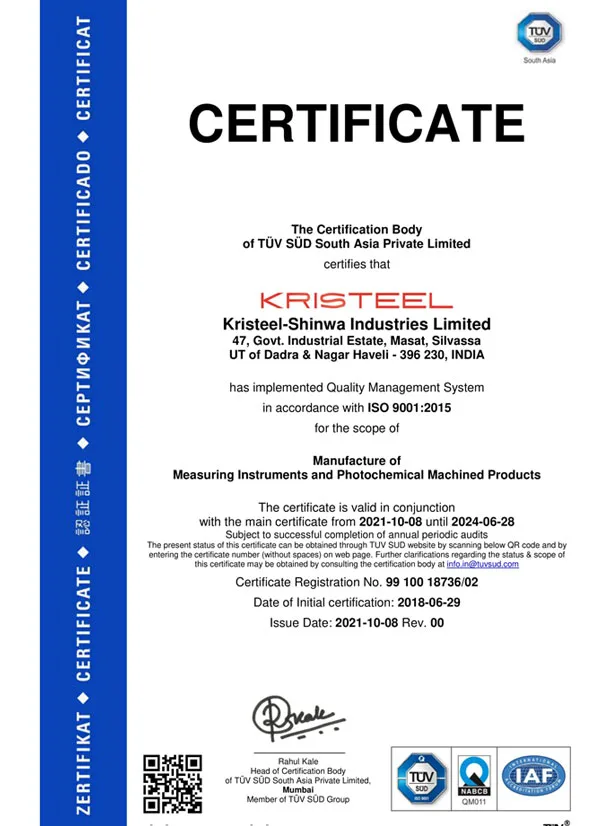
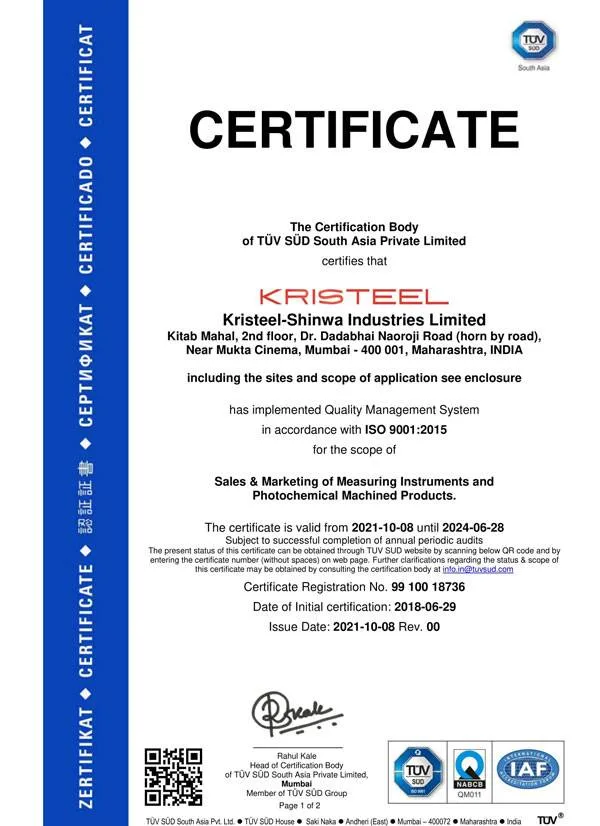
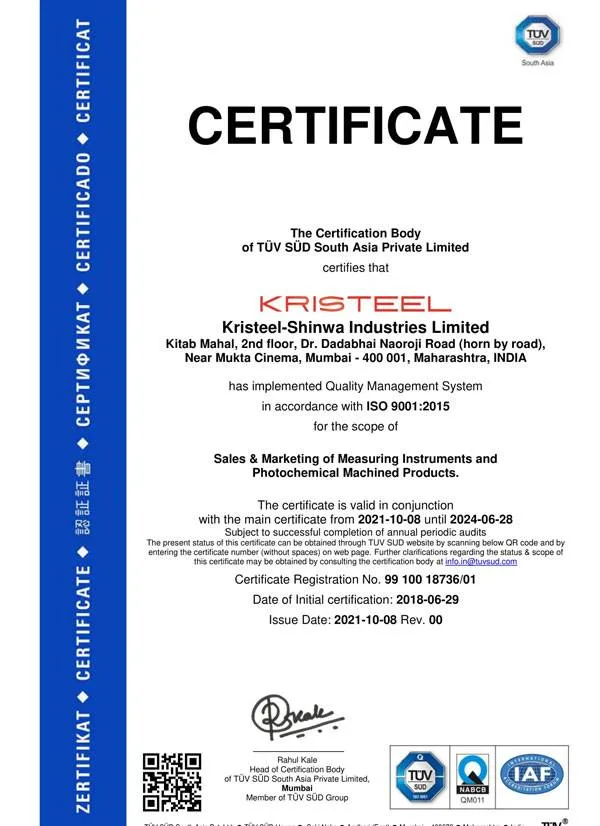
ISO9001 certified facility
T&RTape & reel packing available
Understanding RF Shields
What is an RF Shield?
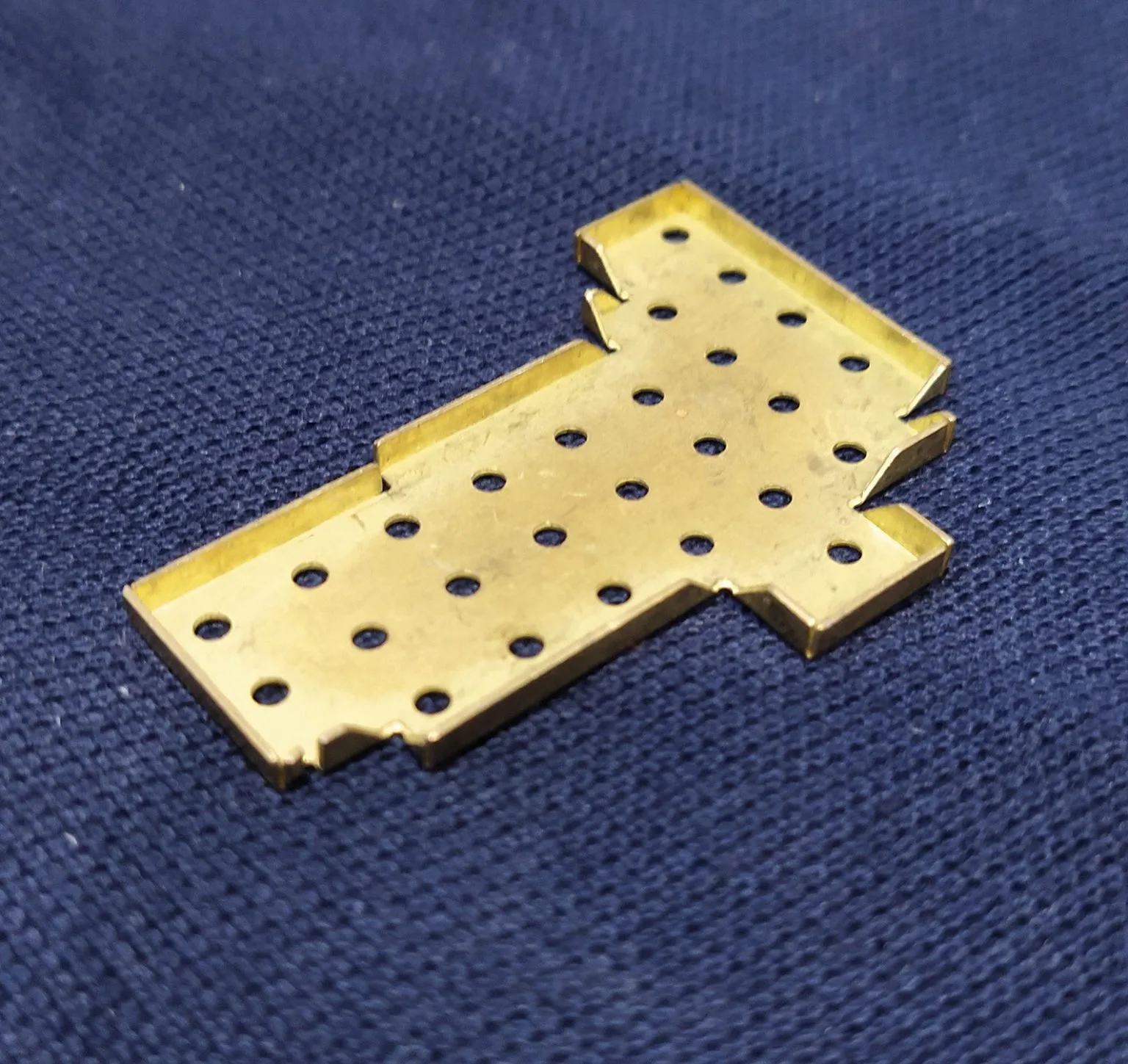
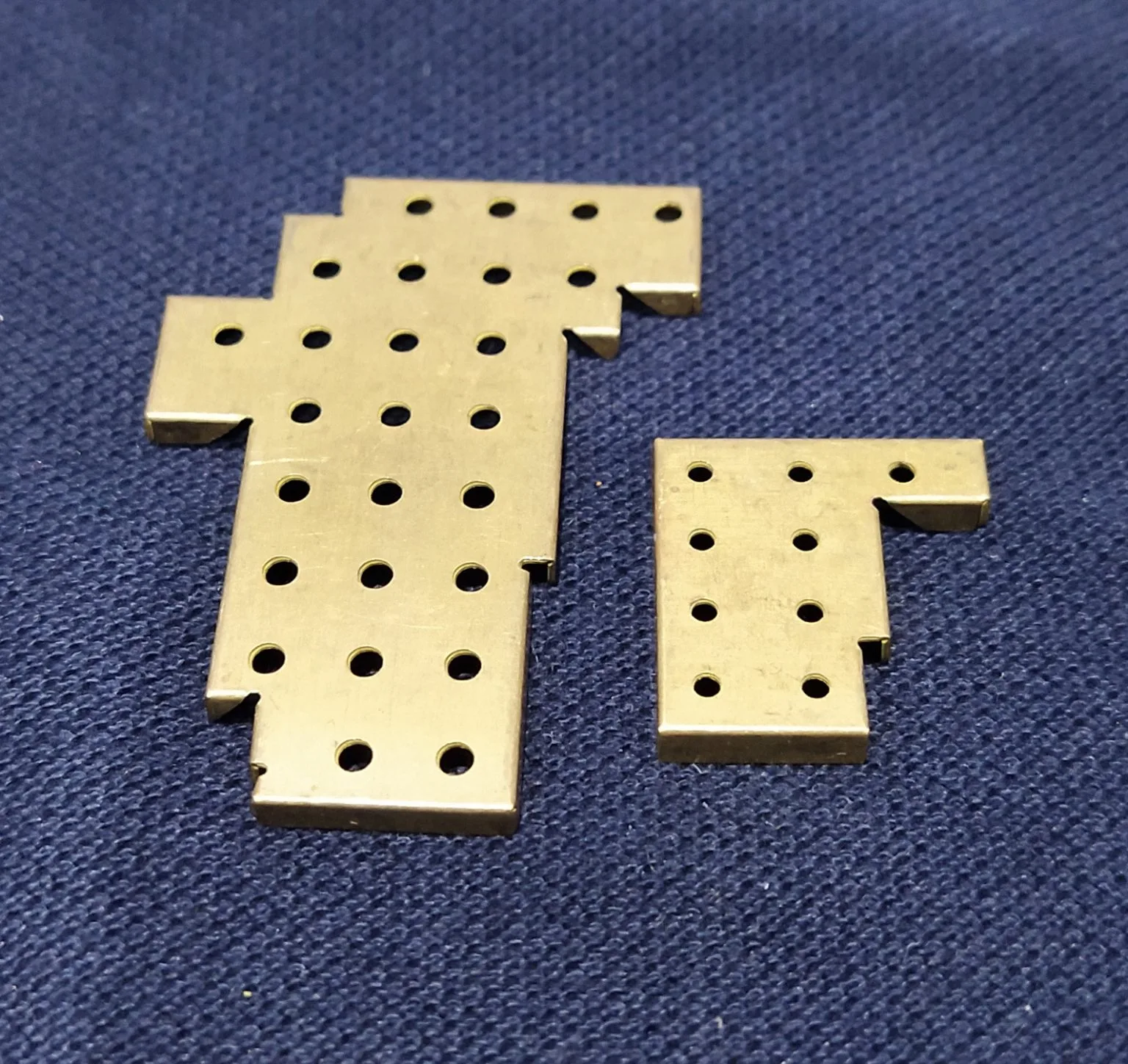
An RF shield — also called an EMI shield, RF shielding can, or electromagnetic shielding cover — is a precision-formed metal enclosure that isolates electronic components from radio frequency interference (RFI) and electromagnetic interference (EMI).
As electronic assemblies become denser and operating frequencies rise, unwanted electromagnetic signals can cause circuit noise, signal degradation, data errors, and regulatory compliance failures. RF shields physically contain these emissions and block external interference from entering sensitive circuit areas on a PCB.
At Kristeel, RF shields are manufactured using progressive die stamping and photochemical etching — processes refined over decades in our Silvassa and Bangalore facilities. Each shield is designed to exacting dimensional tolerances, ensuring consistent fit on automated SMT assembly lines.
How RF Shielding Works
RF shields are soldered or press-fit onto the PCB surface, enclosing targeted circuit areas. Multi-section designs separate digital and RF domains on the same board.
Manufacturing Process
From Drawing to Your Production Line
Kristeel’s RF shield manufacturing process is built on decades of precision sheet metal expertise, combining photochemical etching for prototypes and progressive tool stamping for volume production.
Industries Served
Built for Demanding Applications
Kristeel RF shields are supplied to manufacturers across seven industries where electromagnetic integrity is non-negotiable.
Key Advantages
Why RF Shielding Matters
A well-designed RF shield is an invisible but critical component. These are the real engineering benefits it delivers on your PCB assembly.
Raw Materials & Grades
Choosing the Right Material for Your Shield
The shielding effectiveness of an RF shield depends on material conductivity, permeability, and thickness — not one factor alone. Kristeel works with all industry-standard materials and can advise on the optimum choice for your frequency range and environment.
| Material | Grade / Alloy | Thickness Range | Key Properties | Best For |
|---|---|---|---|---|
| Cold Rolled Steel (CRS) Most Common |
IS 513 CR2 / CR4 SPCC, SPCE |
0.15 – 0.40 mm | Good permeability, cost-effective, excellent formability, solderable with tin plating | Consumer electronics, IoT devices, telecom boards |
| Nickel Silver (NS) | NS-18, ASTM B122 | 0.15 – 0.35 mm | High conductivity, natural corrosion resistance, visually clean finish. Kristeel has in-house capability. | RF shields requiring natural finish, smart meters, industrial electronics |
| Phosphor Bronze | CuSn6, ASTM B103 | 0.10 – 0.30 mm | Excellent spring properties for press-fit lids, superior corrosion resistance, high fatigue strength | Removable lid shields, aerospace sub-assemblies, high-vibration environments |
| Aluminium | 5052, 3003 | 0.30 – 0.80 mm | Low weight, non-magnetic, excellent at high frequencies. Requires mechanical or adhesive bonding (not solderable). | Aerospace, defence, weight-sensitive assemblies |
| Copper Premium |
ETP Cu, ASTM B152 | 0.10 – 0.25 mm | Highest conductivity of any common shield material. Excellent at both low and high frequencies. More expensive. | High-performance RF, satellite, defence communication systems |
| Stainless Steel | SS 304, SS 316 | 0.15 – 0.40 mm | Excellent mechanical strength and corrosion resistance. Moderate electrical conductivity. | Harsh environments, automotive under-hood, industrial controls |
Not sure which material is right for your application? Send us your requirement and our engineers will recommend the optimum grade, thickness, and plating combination.
The Kristeel Advantage
Why manufacturers across India and the world choose Kristeel
Since 1973, Kristeel has built its reputation on one principle: precision that the customer can rely on, at every order size. Our RF shielding capability reflects that — from your first prototype sample to your millionth production unit.
- ✦Prototyping via photochemical etching — no hard tooling required for samples, fast lead times, ideal for R&D and design validation stages.
- ✦In-house progressive die tooling for production volumes — single source from tooling to finished part.
- ✦In-house tin plating and nickel silver plating facilities at our own facility — no dependency on external plating vendors, tighter process control and faster turnaround.
- ✦Automated tape-and-reel packing in industry-standard carrier tape formats for direct feeder loading on pick-and-place machines — eliminating manual singulation on your line.
- ✦Capability across the full volume spectrum: R&D samples → pre-production batches → high-volume bulk orders. One supplier relationship, no hand-offs.
- ✦ISO 9001:2015 certified manufacturing with statistical process control at each stage.
- ✦Manufacturing facilities in Silvassa and Bangalore with imported press equipment from the USA and Europe.
Capability Specifications
In-House Surface Finishing
Plating Options for RF Shields
Surface finish affects solderability, corrosion resistance, and contact resistance of your shield. Kristeel maintains in-house plating for the two most widely specified finishes in the industry.
Other finishes including ENIG, silver, and selective plating can be evaluated for specific requirements — contact our team to discuss your specification.
Packing & Delivery
Ready for Your Production Line
Kristeel offers three packing configurations to match your assembly process — from engineering samples to high-volume automated SMT production.
Common Questions
Frequently Asked Questions
Questions we hear most often from electronics manufacturers evaluating RF shielding suppliers.
What is the difference between an RF shield and an EMI shield?
The terms are used interchangeably in most contexts. An RF shield specifically addresses radio frequency emissions and susceptibility, while EMI shield is the broader term covering the full electromagnetic spectrum including both conducted and radiated interference. In practice, a stamped metal shielding can serves both purposes simultaneously.
Can Kristeel supply prototypes before we commit to production tooling?
Yes — this is one of Kristeel’s key advantages. Prototypes are produced using photochemical etching, which requires no hard tooling investment and typically delivers samples within a few days of drawing approval. Once the design is finalised and approved, we build the progressive die tooling for production quantities. This means your R&D team can iterate quickly without committing to tooling costs on an unvalidated design.
What information do I need to share to get a quote?
To provide an accurate quotation, we need: a 2D dimensional drawing or step/DXF file showing shield dimensions, wall height, fence tab positions, and any apertures; the required raw material and grade; surface finish or plating specification; required quantity (monthly or yearly); and preferred packing format. If any of these are not yet decided, our engineering team can advise based on your application requirements.
Does Kristeel do DFM (Design for Manufacturability) review?
Yes. All drawings submitted for quotation go through a DFM review at no additional charge. Our team checks for minimum bend radii, minimum wall heights, tab positioning relative to the footprint, aperture sizes where ventilation is needed, and plating coverage considerations. If we find any issue that could affect manufacturability or shielding performance, we will flag it before tooling begins.
What is the minimum order quantity for RF shields?
For photochemical etched prototypes and samples, the minimum quantity is very low — suitable for R&D and engineering validation. For stamped production parts, MOQ depends on part complexity and tooling amortisation, but Kristeel works with customers across a wide range of volumes from small batches to millions of pieces per year. Contact us with your requirement and we will confirm the commercial structure that works for your programme.
Can Kristeel supply RF shields in tape and reel for pick-and-place machines?
Yes. Kristeel has automated packing capability for tape-and-reel delivery in EIA-481 standard format. This allows RF shields to be loaded directly into SMT pick-and-place machine feeders alongside other components, eliminating manual placement and enabling consistent automated assembly. The reel format, pocket dimensions, and cover tape peel force can be confirmed based on your machine requirements.
Which industries does Kristeel supply RF shields to?
Kristeel currently supplies RF shields and EMI shielding components to manufacturers in seven industries: consumer and industrial electronics, semiconductor packaging, automotive (including EV and ADAS applications), smart meters and energy management, aerospace, defence, and solar energy (inverter control electronics). If your industry is not listed, please contact us — our manufacturing capability is not limited to these sectors.
Ready to start your RF shield project?
Send us your drawing or describe your requirement. Our engineers will review your design, advise on material and plating, and get you a quotation — usually within 2 business days.