Accurate levelling makes the difference between work that lasts and work that needs redoing. Builders, installers, plumbers, and woodworkers depend on a simple, dependable spirit level to confirm a surface before fixing it in place. Traditional models run without batteries; digital versions add numeric precision. In this blog, you will learn about types of spirit levels and how to use them for accurate measurements.
What Is a Spirit Level?
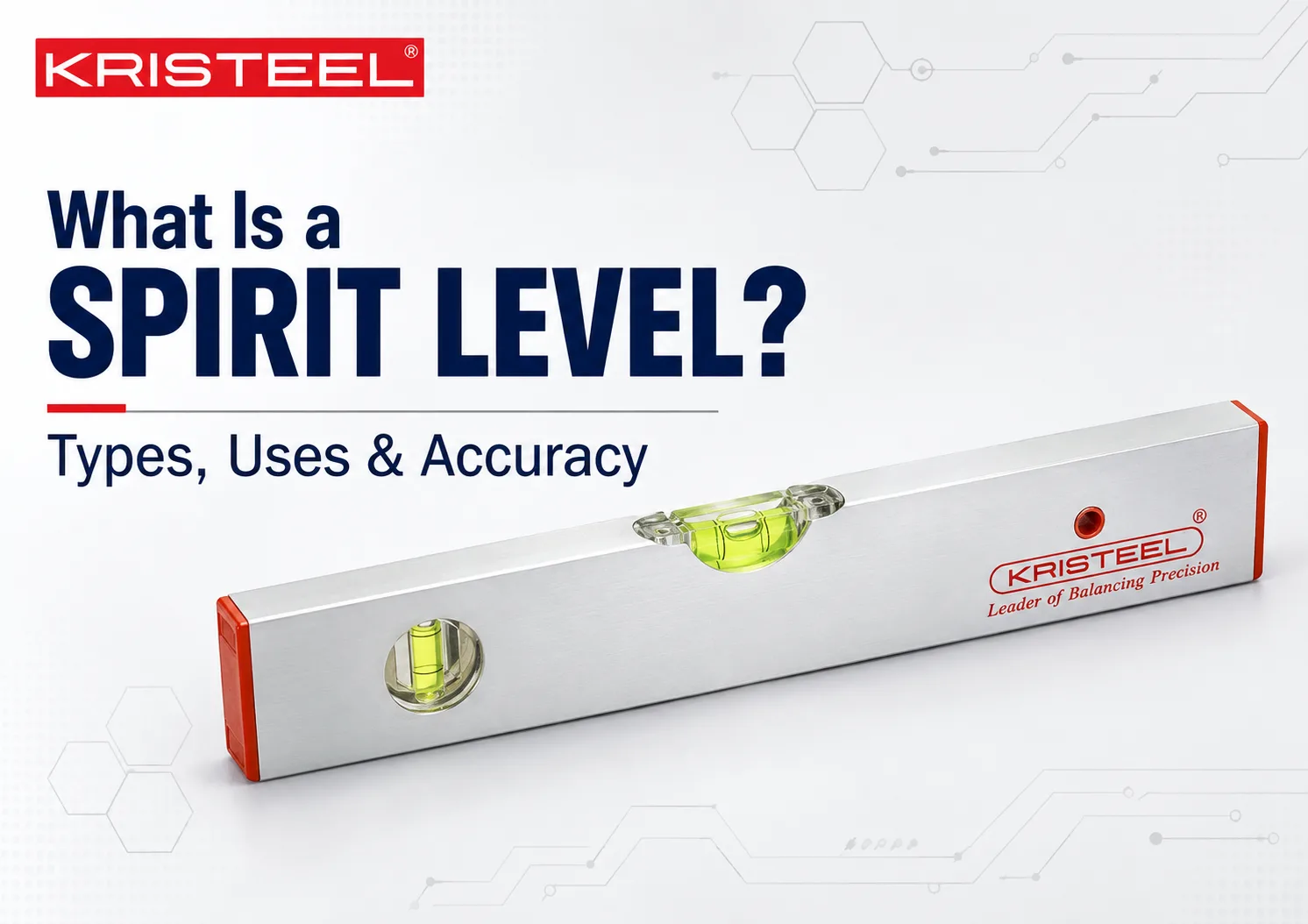
A spirit level, also called a spirit level measuring tool, measures deviation from true horizontal or vertical. A sealed liquid vial leaves one air bubble free to move toward the higher side. Centred between two marked lines, the surface reads level.
How Does a Spirit Level Work?
The liquid never fills a vial completely, so the trapped bubble slides toward the raised end when tilted. Hold the tool flat, and it settles between two etched lines. Every Spirit Level Tool follows this principle.
Main Types of Spirit Levels
Box Spirit Level
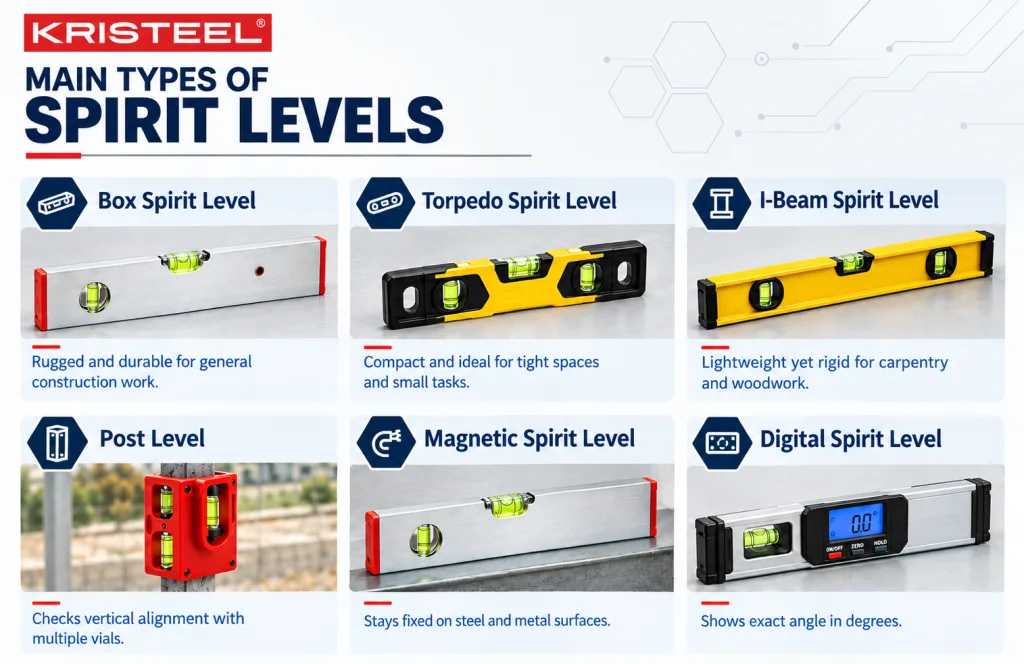
Box levels use a rigid, enclosed body that resists twisting under load, making them a durable, dependable choice for general construction and installation work on busy sites.
Torpedo Spirit Level
Compact and lightweight, torpedo levels fit into gaps a full-length tool cannot reach, making them popular for plumbing, electrical work, and small installation tasks in tight corners.
I-Beam Spirit Level
An I-beam profile keeps the body lightweight yet rigid, a construction that suits carpenters and woodworkers checking door frames, cabinetry, and long structural runs on site.
Post Level
Post levels wrap around square or round posts and poles, holding two or three vials at once so a single check confirms the post stands truly vertical.
Magnetic Spirit Level
A magnetic base grips steel beams, pipes, and metal frames, freeing both hands during installation, a feature welders and metalworkers rely on daily when working on ferrous surfaces.
Digital Spirit Level
A digital spirit level pairs a traditional vial with electronic sensors that display the exact angle in degrees, useful wherever a numeric reading matters more than a bubble check.
What Is a Digital Spirit Level?
A digital spirit level is a vial with an added electronic sensor and display that gives a precise reading of the angle rather than relying on the eye’s judgment. Many models beep near the true level, though they need a battery and periodic recalibration. Digital does not automatically mean more accurate.
Common Uses of a Spirit Level
Construction
Site crews check walls, floors, ceilings, and door frames before finishing work begins, catching uneven surfaces before they turn into costly rework later.
Carpentry and Woodworking
Carpenters align cabinets, shelves, door frames, and furniture joints, keeping every panel square before the fasteners go in for good.
Plumbing
Plumbers check pipe slope and alignment so drainage lines flow correctly, avoiding pooling, backflow, or slow drainage inside finished walls.
Electrical Installation
Electricians align panels, conduits, and fixtures so wiring runs straight and switchboards mount evenly, meeting inspection standards the first time.
Masonry and Brickwork
Masons check horizontal courses and vertical corners row by row, keeping brick and block work straight across long walls and openings.
DIY and Home Improvement
Homeowners mount shelves, pictures, curtain rods, and cabinets straight the first time, avoiding repeated drilling and crooked fixtures.
How Accurate Is a Spirit Level?
Accuracy depends on vial sensitivity, manufacturing tolerance, tool length, and surface condition. A longer level reveals smaller deviations than a shorter one. Dirt on the base or a poorly calibrated vial skews readings.
How to Check the Accuracy of a Spirit Level
Place the level on a reasonably flat surface and note the bubble position. Turn the tool 180 degrees and check again. A matching reading confirms accuracy; a shift signals a calibration issue.
Factors That Affect Spirit Level Accuracy
Worn vials, dents in the body, dirt on the base, and extreme temperature swings all distort readings. Rough handling speeds up this wear, so tools in daily use still need periodic inspection.
How to Choose the Right Spirit Level
Match the tool to the job: length for the surface, vial orientation, and a magnetic base for steel. Weigh a Digital Spirit Level against a traditional design by the precision needed.
Choosing Reliable Spirit Level Suppliers and Manufacturers
Buyers should review specifications, tolerance, and material quality from spirit level suppliers and spirit level manufacturers before ordering in bulk. Ask about quality-control practices and available sizes. Established spirit level manufacturers like Kristeel, backed by decades of expertise, help ensure consistent quality, precision, and reliability in every tool supplied to the site.
Spirit Level vs. Digital Spirit Level
Traditional and digital models solve the same problem differently, as shown below.
| Feature | Spirit Level | Digital Spirit Level |
| Power source | None | Battery |
| Reading type | Visual bubble | Numeric angle or slope |
| Portability | Very high | Moderate |
| Best for | General site use | Precision-critical tasks |
| Maintenance | Minimal | Calibration and battery checks |
Conclusion
A spirit level remains one of the simplest, most essential tools for checking alignment across construction, plumbing, and DIY projects. Traditional and digital spirit level models suit different situations, one built for speed, the other for precision.